When: Saturday, October 3, 2026, from 8:30 a.m. to 5:00 p.m. Where: Cal State University, Fullerton, and on Zoom Registration is OPEN
Writers and illustrators are invited to a full day of speaker presentations, critiques, pitches, first pages, contests, and mingling with fellow creatives! This hybrid event is both in-person and via Zoom. Attendees will have access to the videos for 30 days following the event and receive submission guidelines from all our faculty.
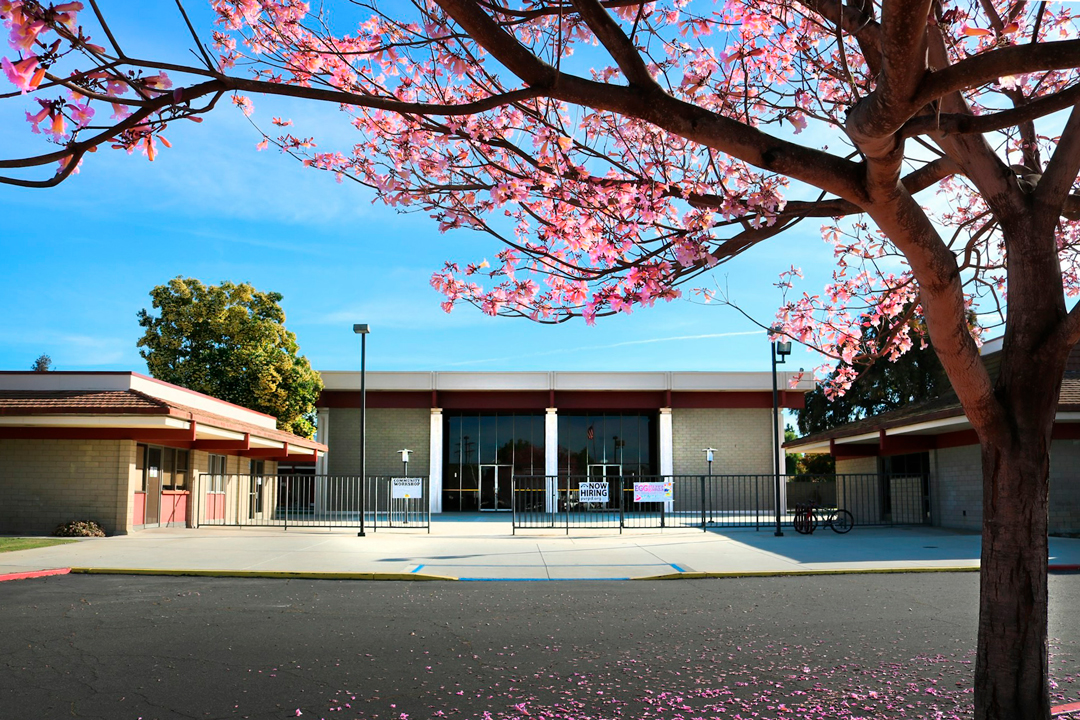
The 2026 SCBWI CenCal Writers and Illustrators Day will take place at the Pleasant Valley Recreation and Park District Auditorium
by Ann Rousseau Smith, SCBWI CenCal News Liaison
Join us for CRAFT, CREATIVITY, AND COMMUNITY at Writers and Illustrators Day 2026!
Meet up with other creatives on Saturday, October 24, 2026, at the Pleasant Valley Recreation and Park District Auditorium, 1605 E. Burnley Street in Camarillo (same as last year). Lunch is provided. In addition to our speakers and first pages panel, we’ll be offering written critiques, writing contests, prizes, and a chance to mingle with other writers and illustrators. There will be an optional pitchfest on the next Saturday, October 31, 2026, via Zoom.
In April, we invited authors to apply for a six-month mentorship with one of our PAL (Published and Listed) members. Open to writers in the earlier stage of their career, the SCBWI-L.A. mentor contest has been a springboard to many a successful career.
This year’s mentor, Rebecca Langston-George received several worthy applications from local writers, all of whom have bright futures ahead. She is grateful to have friends in the writing community willing to trust her with their precious stories and wants to thank each person who applied.
SCBWI members’ publishing news is something to celebrate here at Kite Tales! Check out whose book is coming to a platform near you or around the world. Horn-tooting and digital high fives welcome in the comments!
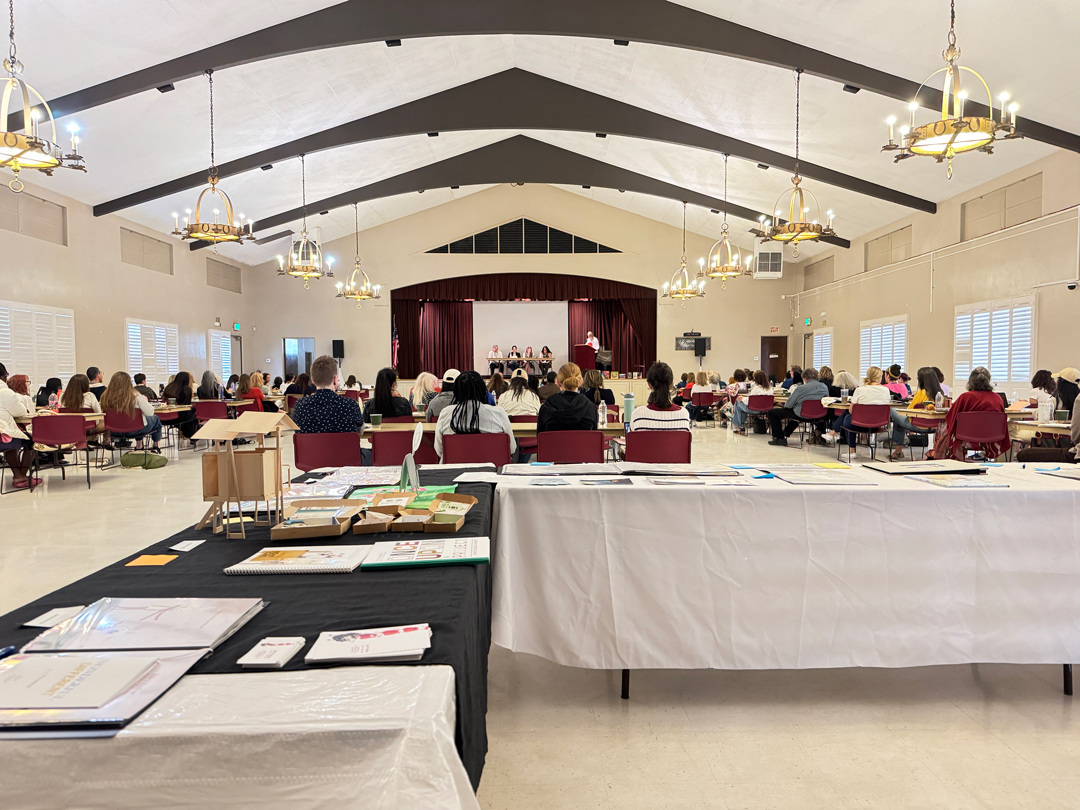
The Friendship Auditorium offered a spacious stage for the 2026 SCBWI-Los Angeles Writers and Illustrators Day
Los Angeles’ Friendship Auditorium was an aptly named site for this year’s SCBWI-Los Angeles Writers and Illustrators Day. For the event’s more than 120 attendees, it was a day for meeting, greeting, and gaining knowledge. With educational talks, award presentations, and display spaces for both authors and illustrators, the event was equal parts inspiration and celebration. Read on for a recap of the day!
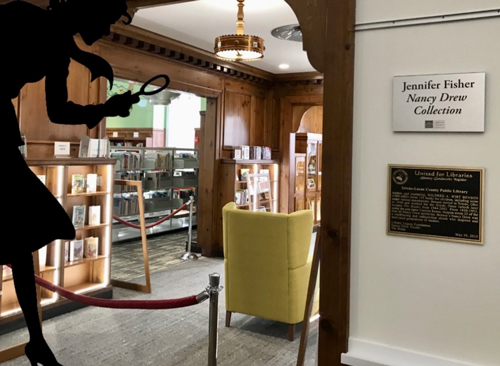
Entranceway to the Jennifer Fisher Nancy Drew Collection at the Toledo Lucas County Public Library
From childhood fandom to literary preservation, one woman has spent decades helping safeguard Nancy Drew’s legacy while building a community for readers who have never stopped believing in the iconic sleuth.
Before there were conventions, archives, or dedicated museum-style collections, there were simply readers.
Readers like Jennifer Fisher, who grew up devouring Nancy Drew mysteries before eventually becoming arguably Nancy Drew’s foremost historian and preservationist, having donated more than 5,000 objects of her own for fans to explore and enjoy at the world’s largest collection of Nancy Drew materials.
And readers like me, a little girl growing up in Toledo with her own shelves full of Nancy Drew mysteries, who also once convinced a furniture store to sell her parents a Nancy Drew book that had been set up as part of a mock–living room display.
Decades later, those two parallel reading journeys converged inside the Toledo Lucas County Public Library, where Fisher’s expansive Nancy Drew Collection now draws visitors from around the country, fans who make literary pilgrimages to see the collection in person.
As Nancy Drew approaches her 100th anniversary, Fisher is working to continue to preserve rare artifacts and publishing history alongside her organizations, the “Nancy Drew Book Fans” and the “Nancy Drew Sleuths,” providing fans with a place to gather and a sense of belonging in celebration of a beloved fictional teenage detective.
In our conversation for SCBWI, Fisher discusses fandom, literary preservation, storytelling authenticity, and why Nancy Drew still resonates nearly a century later.
Philana Marie Boles visits the Jennifer Fisher Nancy Drew Collection during the series’ 95th Anniversary Conference.
Every writer wants to create something that lasts. A book that sells. A story world where readers return again and again, across years, even generations. Little House on the Prairie. The Chronicles of Narnia. Harry Potter. And nearly 100 years after its first publication, Nancy Drew.
Even if it isn’t one’s goal to write a multi-book series, the principles behind Nancy Drew’s staying power apply across genres and formats for all writers to consider. Readers connect with characters they enjoy, understand, and trust.
Originally written for girls aged 12–16, Nancy Drew has expanded into more than 600 mysteries since its debut in 1930 and an IP world that now includes a series for even younger readers, one with college-era stories, a modern reboot, and a contemporary relaunch. Television, film, and video games have sustained a global readership spanning generations, and Nancy Drew is arguably the earliest and most enduring example of a scalable story world.
**Note: The SCBWI-L.A. Mentorship is a six-month program that alternates between various categories of writing and illustrating. In this post, our 2025 winner, author Julia Edwards, shares her experience with the program. The 2026 mentor will be announced at the end of the post.**
by Julia Edwards
Last year, I was the lucky winner of the SCBWI-L.A. Mentorship Contest and got to work with middle-grade author Sherry Shahan for six months on my manuscript I Speak for the Trees.
Mentee Julia Edwards and mentor Sherry Shahan in conversation
I am so glad I met this human! She is enthusiastic, she asks essential questions, she elucidates truths. She dove into her own research to understand the heart of my story, and we had deep conversations about eco-anxiety, the Wood Wide Web of mushroom fibers that allows trees to communicate, women’s climbing camps, and more.
Have you ever thought about writing nonsense poetry for children? It holds such great appeal, and librarians will tell you that poetry collections of this genre are among the favorite books that kids take home.
What makes nonsense poetry so popular? Perhaps most important, it is whimsical and imaginative. But rather than trying to define it further (since its borders are ever-widening), looking at some common elements is probably more useful.
Wordplay
“Betty Botter bought some butter, But she said this butter’s bitter…”
Who among us as children didn’t try to repeat “Betty Botter Bought some Butter” or “Peter Piper Picked a Peck of Pickled Peppers”? These tongue twisters,classics that have been with us for centuries, offer an engaging challenge to kids when reading them aloud or memorizing them. Today there are even whole books written with that style, for example, Margaret Mahy’s Bubble Trouble.
Tweaking words in humorous ways for the sake of rhyming is another time-honored technique. Chris Harris, in his poem “The Modern Dinosaur,” cleverly messes with our language by using “thinked” as a punch line set-up for “extinct.” And in “The Hungry Giraffe,” he pairs “swallow” with an unexpected “tomallow.”