Step Out of Your Daily Life. Step into Your Creative Self.
Imagine an entire weekend dedicated to one thing: your writing or illustrating.
Come join a small group of supportive people who share your goal of creating excellent books for young readers. Leave behind the cooking, cleaning, and endless emails to gift yourself rare uninterrupted creative time in a peaceful, inspiring setting. Write. Draw. Revise. Brainstorm. Receive thoughtful critiques. Share with fellow creatives who understand the joys and challenges of bringing a book to life.
Have you ever thought about writing nonsense poetry for children? It holds such great appeal, and librarians will tell you that poetry collections of this genre are among the favorite books that kids take home.
What makes nonsense poetry so popular? Perhaps most important, it is whimsical and imaginative. But rather than trying to define it further (since its borders are ever-widening), looking at some common elements is probably more useful.
Wordplay
“Betty Botter bought some butter,
But she said this butter’s bitter…”
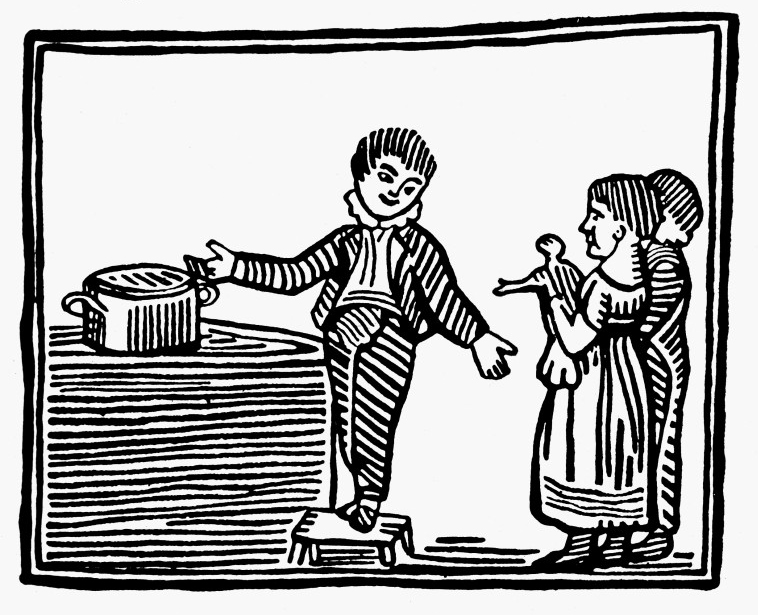
Who among us as children didn’t try to repeat “Betty Botter Bought some Butter” or “Peter Piper Picked a Peck of Pickled Peppers”? These tongue twisters,classics that have been with us for centuries, offer an engaging challenge to kids when reading them aloud or memorizing them. Today there are even whole books written with that style, for example, Margaret Mahy’s Bubble Trouble.
Tweaking words in humorous ways for the sake of rhyming is another time-honored technique. Chris Harris, in his poem “The Modern Dinosaur,” cleverly messes with our language by using “thinked” as a punch line set-up for “extinct.” And in “The Hungry Giraffe,” he pairs “swallow” with an unexpected “tomallow.”
Poetry invites experimentation. Many writers have accepted the invitation and found ways to uniquely express themselves—by diverging from traditional formats in ways that enhance the meaning and imagery of their poems. We’ll take a look at a few of these artists and excerpts from their work, with a particular eye for the verse they created for children.
E. E. Cummings (1894–1962) left a major mark on the genre of poetry. Poet-critic Randall Jarrell said of him, “No one else has ever made avant-garde, experimental poems so attractive to the general and the special reader.”1 Cummings rarely capitalized words (his name, included) and used space and punctuation in unusual ways, jarring readers from the expected and getting them to think about the words and their meanings in the context of the poems.
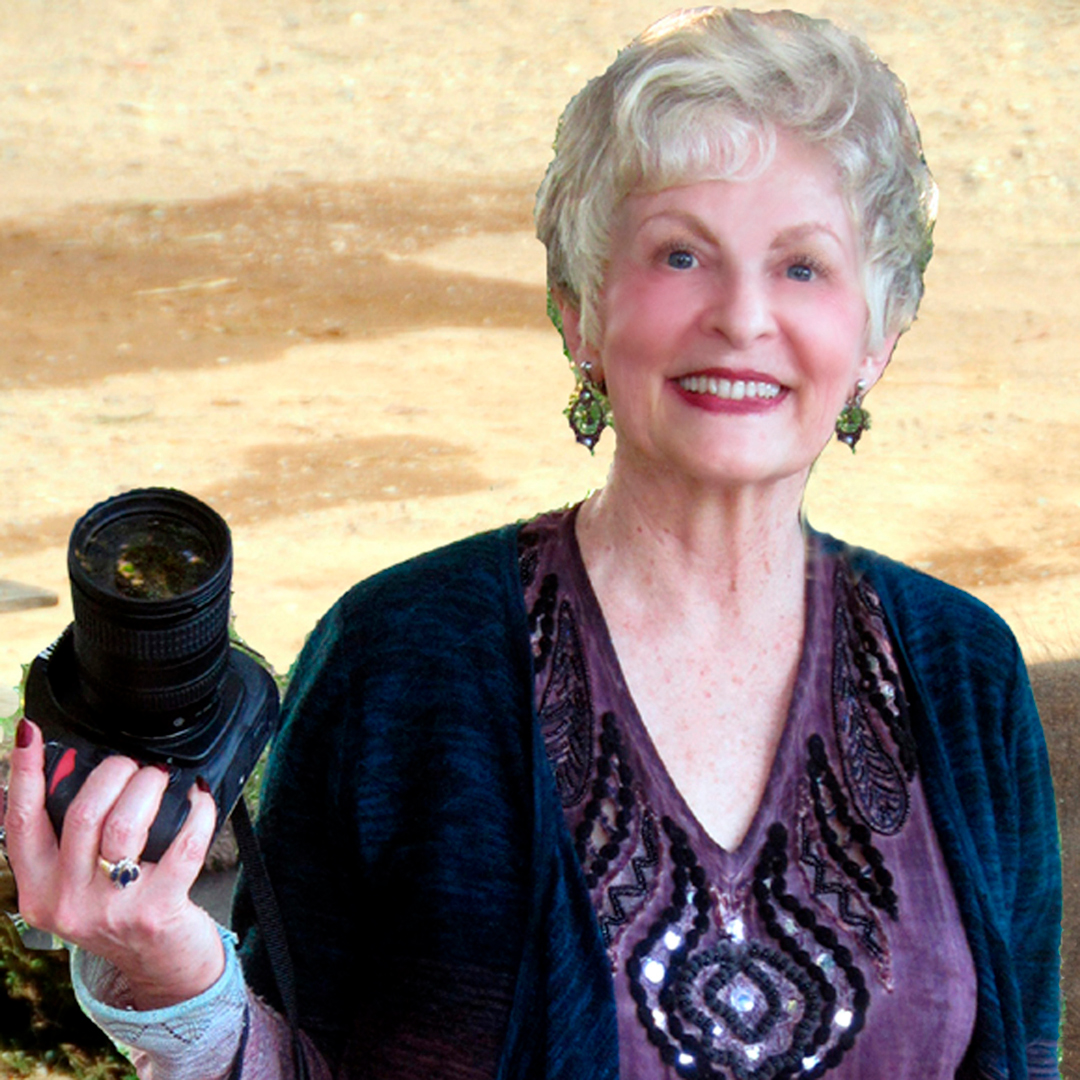
Longtime SCBWI member Joan Bransfield Graham is an award-winning children’s poet whose books include Splish Splash and Flicker Flash—shape poems about water and light (Houghton Mifflin Harcourt). Both books were School Library Journal Best Books of the Year and NCTE Notable Children’s Books in the Language Arts, among many other honors. Her other published works include The Song We Chose to Sing (ACTA), a poetry/music CD, and The Poem That Will Not End: Fun with Poetic Forms and Voices (Amazon Children’s Publishing/Two Lions). She has also contributed to many poetry anthologies.
Joan took a moment to answer some questions for the Kite Tales Blog.
ANN ROUSSEAU SMITH: Congratulations on your newest book, Awesome Earth, illustrated by Tania García. You have written many poems in many poetic forms. Why concrete or shape poems for this new book?
JOAN BRANSFIELD GRAHAM: Thank you, Ann! Since I was going to be featuring landforms, shapes that grace our Earth, what better way to explain a shape than with shape itself—concrete poetry. Not only is the poem talking about the landform but also showing it. Awesome Earth combines poetry, science, and art to explore what creates landforms from “Mountain,” “Glacier,” and “Volcano” to “Island,” “Hills,” and “Hoodoos”—artistic wonders that cover our Earth’s surface. It’s a perfect book for STEAM, National Poetry Month, and Earth Day. Many teachers have told me that my poetry has proven helpful for their students who are acquiring English as it offers many clues to unlocking the words.
ARS: I love how poems in any form—concrete or other—create visual images for the reader or listener. Can you share any writing tips for the poet in all of us?
JBG: MY FIVE FAVORITE POETRY WRITING TIPS
1. Use all of your senses.
2. Use vigorous verbs, marvelous metaphors.
3. Each poem is a mini-story with a beginning, a middle, and an end. If your poem doesn’t have a payoff or new perspective at the end, maybe it’s upside down. Don’t give it away at the start.
4. Use details to reach the universal. Zoom in for a close-up or write a wide-angle, big picture poem.
5. Write the poem you’ve never read before.
ARS: Since Awesome Earth is a nonfiction book it contains back matter, including information on landforms, a glossary, and additional resources for readers. How involved are you with the back matter? Do you find all the information and references, or does the publisher assist?
JBG: I did all of the back matter myself, including the photos. Originally, the additional information was going to be sidebars, but the design team decided to use everything as back matter. It’s a challenging endeavor to take a huge amount of research, distill it, and make it easy to understand. How do you introduce tectonic plate theory and continental drift to a four- to eight-year-old? My books always have a much wider age range than what is listed. In ice-skating, doing jumps and twirls can look so effortless because the skaters have put a lot of work into it. The same goes for writing. Speaking of age range, landforms are studied in all grades, just in different ways. Once a woman said to me, “I don’t know who is having more fun with this book (Flicker Flash)—my six-year-old grandson or his father, who is a physicist!” It’s wonderful to get a response like that!
ARS: You are a longtime member of the SCBWI and a volunteer board member of the Central-Coastal California (CenCal) Region. How helpful has your involvement with the organization been to your writing and publishing career?
JBG: When we first moved to California, I was at the local library one day reading a copy of The Writer magazine, where I saw an ad for the SCBW (it didn’t have the “I” yet) Summer Conference in Santa Monica. Where is Santa Monica? I thought it wasn’t too far away, decided to attend, and have been going ever since. I’ve made lifelong friends, heard amazing writers, artists, editors, and agents speak and share their knowledge of both craft and the business side of publishing, learned a great deal, and had an incredible opportunity to meet a wealth of creative, amazing people, and so I have been a volunteer forever—I am so grateful I joined! Thanks to you, Ann, for your volunteer work, for helping to share happy news and keep us all connected!
Thank you, Joan, for all your thoughtful responses!
For more information about Joan and her books visit her childrensauthorsnetwork! website. Join her on Facebook.
For information on SCBWI-CenCal events (open to all SCBWI members!), go to scbwi.org/regions/cencal.
For more fantastic content, community, events, and other professional development opportunities, become a member today! Not sure if there is a chapter in your area? Check here.
Images provided by Joan Bransfield Graham and the SCBWI Central-Coastal Region
Events, Opportunities, and Resources happening now and coming soon for the Tri-Regions and beyond
Check out more resources at the end of the post!
APRIL 9 Register to attend Writing Poetry for Children with April Halprin Wayland through UCLA Extension! “In three hours of lecture, group participation, and individual writing time, you learn the basics of writing poetry for children, play with different forms, and learn to hear children’s poetry with new ears.” This class is free to attend and will take place on April 9, 2025, from 12:00 p.m. to 3:00 p.m. Pacific Time. Click here to save your spot!
SCBWI members’ publishing news is something to celebrate here at Kite Tales! Check out whose book is coming to a platform near you or around the world. Horn-tooting and digital high fives welcome in the comments!
SCBWI members’ publishing news is something to celebrate here at Kite Tales! Check out whose book is coming to a platform near you or around the world. Horn-tooting and digital high fives welcome in the comments!
SCBWI members’ publishing news is something to celebrate here at Kite Tales! Check out whose book is coming to a platform near you or around the world. Horn-tooting and digital high fives welcome in the comments!
Poet-TeacherJessica Wilson, Los Angeles area coordinator for California Poets in the Schools
California Poets in the Schools Poet-Teacher Jessica Wilson brings poetry to students at elementary, middle, and high school levels. As CalPoet’s area coordinator for Los Angeles County, she onboards new Poet-Teachers and manages new opportunities for the program. Jessica is also active in the broader Los Angeles poetry community, including as founder and director of the Los Angeles Poet Society, whose offerings include year-round open mic events, a Creative Aging Senior Advocacy program, and Bilingual Poetry Workshops for all ages.