
Tags
book series, books, business, Carolyn Keene, community, craft, Edward Stratemeyer, Jennifer Fisher, Mildred Wirt Benson, mystery, Nancy Drew, Nancy Drew Collection, Philana Marie Boles, Toledo Lucas County Public Library, writing, writing tips
by Philana Marie Boles
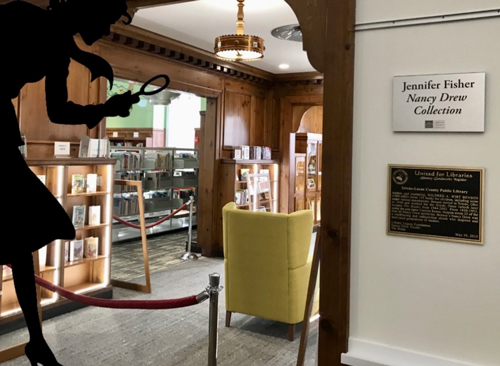
From childhood fandom to literary preservation, one woman has spent decades helping safeguard Nancy Drew’s legacy while building a community for readers who have never stopped believing in the iconic sleuth.
Before there were conventions, archives, or dedicated museum-style collections, there were simply readers.
Readers like Jennifer Fisher, who grew up devouring Nancy Drew mysteries before eventually becoming arguably Nancy Drew’s foremost historian and preservationist, having donated more than 5,000 objects of her own for fans to explore and enjoy at the world’s largest collection of Nancy Drew materials.
And readers like me, a little girl growing up in Toledo with her own shelves full of Nancy Drew mysteries, who also once convinced a furniture store to sell her parents a Nancy Drew book that had been set up as part of a mock–living room display.
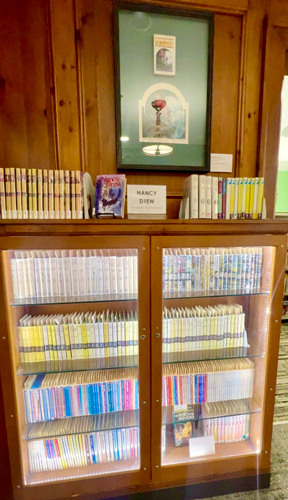
Decades later, those two parallel reading journeys converged inside the Toledo Lucas County Public Library, where Fisher’s expansive Nancy Drew Collection now draws visitors from around the country, fans who make literary pilgrimages to see the collection in person.
As Nancy Drew approaches her 100th anniversary, Fisher is working to continue to preserve rare artifacts and publishing history alongside her organizations, the “Nancy Drew Book Fans” and the “Nancy Drew Sleuths,” providing fans with a place to gather and a sense of belonging in celebration of a beloved fictional teenage detective.
In our conversation for SCBWI, Fisher discusses fandom, literary preservation, storytelling authenticity, and why Nancy Drew still resonates nearly a century later.
The Reader Who Became a Historian

In the beginning, Jennifer Fisher was simply a young reader captivated by Nancy Drew mysteries.
Like many devoted fans, she grew up with a mismatched collection of Nancy Drew books gathered from bookstores, libraries, and secondhand finds. She devoured both the classic mysteries and later paperback series, including the popular Nancy Drew Files books released in the 1980s. But years later, while attending law school, her relationship with the series transformed into something deeper.
At an antique mall, Fisher stumbled across a 1930s edition of The Hidden Staircase. Having grown up with the revised yellow-spine editions, she barely recognized what she was holding.
“At the time, I didn’t know Nancy Drew went back to 1930,” Fisher says. “That sparked my interest.”
The discovery led her into the emerging online world of Nancy Drew collectors and researchers in the late 1990s, where conversations extended far beyond the books themselves. Suddenly, Fisher found herself fascinated by the hidden history surrounding the series. The ghostwriters, the publishing changes, the artwork, memorabilia, and behind-the-scenes figures who helped shape one of children’s literature’s most enduring fictional worlds.
A lifelong history lover whose college minor was history, Fisher launched a newsletter “The Sleuth” and began approaching the history of the series, ironically, almost like an unfolding mystery itself.
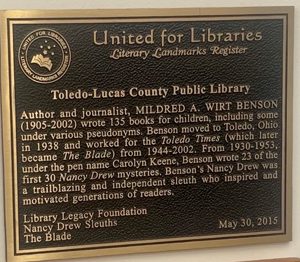
That journey eventually led her to one of the most meaningful moments of her life: meeting Mildred “Millie” Wirt Benson, the Ohio based original Nancy Drew ghostwriter whose work helped define the character for generations of readers.
“It felt like meeting living history,” Fisher says of their 2001 meeting in Toledo, where Benson was still writing for The Blade newspaper in her nineties.
During that visit, Benson playfully bestowed Fisher with a title that would unexpectedly stick. At the time, Fisher was moderating an online Nancy Drew discussion group that had not yet formally evolved into the fan organization it would later become.
Struggling to describe Fisher’s role for an article she was writing, Benson finally decided to simply call her the group’s “president.”
Fisher recalls the designation with a laugh. “So, I just kind of ran with it.”
Why Nancy Drew Still Resonates
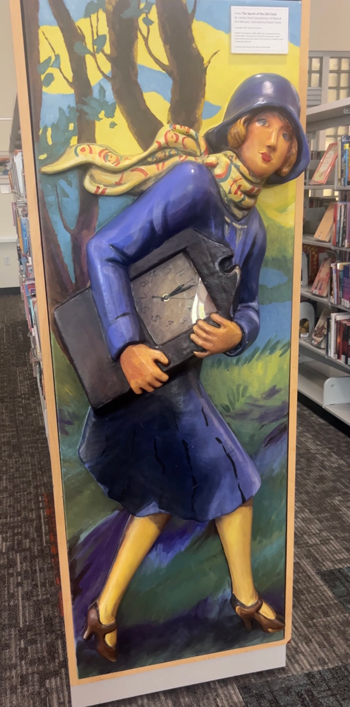
Nearly a century after her debut, Nancy Drew maintains a level of longevity few fictional characters ever achieve. For Fisher, that staying power begins with Nancy herself.
“I think Nancy Drew herself—the character—is what has endured,” Fisher notes. “Her boldness, bravery, willingness to help others, and willingness to always risk herself in order to do the right thing…”
When Nancy Drew first appeared in 1930, she represented something unusually progressive for young female readers. Arriving only a decade after women finally gained the right to vote, Nancy operated with a level of independence rarely afforded to girls in fiction at the time.
Nancy drove, traveled, investigated crimes, and trusted her own instincts as a woman.
“I think girls craved that freedom,” Fisher says. “And, I think kids still crave [that kind of] freedom now.”
But Fisher believes the series’ longevity extends beyond nostalgia. Over the years, she has watched readers from vastly different backgrounds find common ground through their shared love of Nancy Drew.
“As a community, we’re not worried about politics or religion or all those controversial topics that divide people,” Fisher says. “Through Nancy, we have something safe and sane that we can enjoy together.”
That emotional connection often runs deeper than readers initially realize. Through conventions and fan gatherings, Fisher has met countless readers who describe Nancy Drew as a source of comfort during difficult periods of their childhood.
“We’ve had fans who had really rough childhoods, and Nancy Drew was their escape to find a happy place,” Fisher notes.
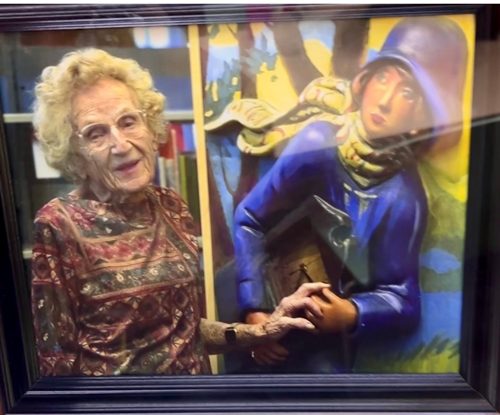
For many readers, the appeal also lies in the immersive nature of mystery itself.
Nancy Drew invites readers along on the investigation journey. Secret passageways, cliffhangers, hidden clues, and various settings all encourage readers’ imaginations to participate alongside the protagonist rather than just passively observe from the sidelines. In a Nancy Drew mystery, the young readers get to think.
Even as formats, publishers, and generations have changed, Fisher believes the emotional core of Nancy Drew has remained remarkably consistent: courage, curiosity, justice, and the promise that young readers can solve problems themselves and definitely don’t need a didactic storytelling approach.
“Whether we’re talking about vintage Nancy Drew or modern Nancy Drew,” Fisher says, “those core traits still carry through.”
What Writers Can Learn from Nancy Drew
According to Fisher, Nancy Drew’s longevity also offers valuable lessons for writers who write for young readers.
“One of the most important baselines,” Fisher emphasizes, “is authenticity. Do not lecture children. Let them judge situations for themselves.”
While Nancy Drew’s mysteries often reinforce values like kindness, loyalty, perseverance, and courage, Fisher notes that the books rarely feel overtly instructional. Instead, readers always have the opportunity to absorb lessons naturally.
“As a reader, you’re learning through Nancy’s actions, not the book’s words,” Fisher stresses.
That balance, Fisher believes, has helped generations of readers emotionally invest in the series without feeling talked down to. Even as the books occasionally incorporate educational details—be it vocabulary words, cultural references, geography, or bits of history—the primary focus remains character-driven storytelling coupled with adventure.
“The books were created to be entertaining mysteries first.” Fisher points out another important quality, reflecting on the immersive nature of mystery writing itself as part of the series’ appeal.
Classic mystery devices such as cliffhangers, secret passageways, hidden rooms, and suspenseful suspects still hold power with the imagination.
“I think a lot of us just like the old Gothic style of mystery,” Fisher says. “The suspense, the secret passageways. Kids love uncovering hidden things.”
At the same time, Fisher believes that today’s writers can learn from some of the series’ limitations as well.
Earlier Nancy Drew books sometimes introduced compelling side characters who disappeared after a single installment, leaving readers wanting more continuity and emotional evolution.
“People get attached to secondary characters,” Fisher says. “They want to see them again. Let them…”
For today’s authors, she sees an opportunity to combine the classic emotional accessibility of Nancy Drew with deeper long-form character continuity and modern storytelling sensibilities.
Above all, Fisher believes lasting children’s literature succeeds when it respects its audience.
“There’s a trust between the author and the reader,” Fisher says. “Kids especially know when something feels authentic. Never underestimate them.”
Preserving a Literary Legacy
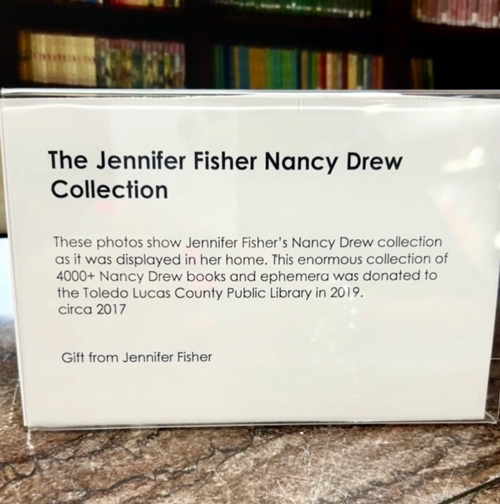
In 2019, Fisher’s decades-long passion project found a permanent home when she donated more than 5,000 Nancy Drew books, artifacts, and memorabilia items to the Toledo Lucas County Public Library, helping to create the most extensive public Nancy Drew collection in the country.
But for Fisher, the collection was never about accumulating objects.
“I knew I wasn’t just collecting objects,” Fisher says. “I was collecting puzzle pieces for fans.”
Over the years, her interest has expanded far beyond the novels themselves to include vintage advertisements, original artwork, promotional materials, historical media clips, and behind-the-scenes artifacts connected to the evolution of the series. Together, she felt that those pieces told a much larger story about publishing history, fandom, and the cultural impact of Nancy Drew across generations.
Initially, Fisher imagined donating the collection much later in life. But after years of visiting Toledo—home to original Nancy Drew ghostwriter, Mildred Wirt Benson, while she wrote the mysteries as well as during her journalism career—the idea increasingly felt right. So, when Fisher got the call from the library with the request, she agreed.
“It just felt like the perfect home and time for it,” Fisher says.
The collection has since drawn visitors from around the country to experience the archive in person. Fisher recalls one especially memorable moment when a fan was even proposed to while inside the collection room.
“It really has become a community space,” Fisher reflects.
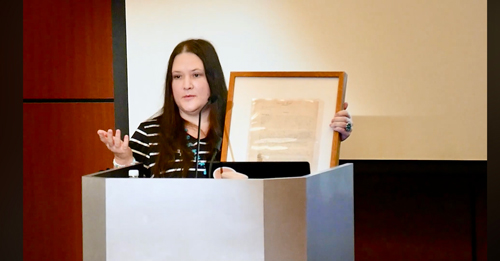
That sense of stewardship has deepened in recent years through Fisher’s ongoing Mildred Wirt Benson Historical Artifacts Recovery Project, an effort focused on locating and preserving scattered historical documents connected to Benson’s life and work.
After learning that some potentially significant materials may have been discarded during estate clean-outs years earlier, Fisher became increasingly determined to help preserve what remained before additional pieces of literary history disappeared.
“These pieces aren’t novelties,” Fisher explains of her passion. “They’re history.”
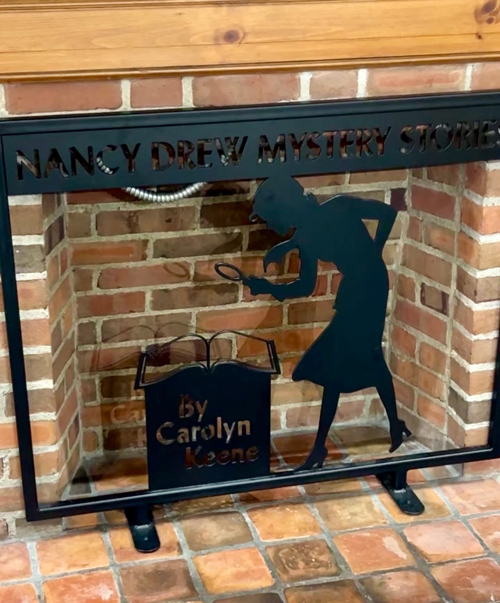
Over the years, additional collectors have begun contributing rare materials, documents, and artwork to the Toledo archive as well, helping the collection grow beyond Fisher’s original donation.
For Fisher, she is driven to ensure that future readers, scholars, and fans can continue engaging with the world of Nancy Drew long after the current generation is gone.
“I wanted something more than boxes sitting in an archive,” Fisher says. “I wanted people to be able to experience it.”
Looking Toward 100 Years
As Nancy Drew approaches her 100th anniversary in 2030, Fisher is already helping plan the next chapter of the beloved sleuth’s legacy.
Upcoming centennial celebrations will likely include a major gathering in Toledo connected to the library collection, as well as a themed Hawaii convention inspired by several Nancy Drew mysteries set across the islands.
At the same time, Fisher said she is working on what may become one of her most meaningful contributions yet: a full biography of Mildred Wirt Benson, the pioneering journalist and author whose writing helped shape Nancy Drew for generations of readers.
And yet, after decades spent researching, collecting, organizing conventions, and preserving literary history, Fisher said she still ultimately just sees herself the same way she did as a child, a reader of Nancy Drew mysteries.
“People from all walks of life come together because we all love Nancy,” Fisher concludes. “There’s something really quite special about that.”
Nancy Drew community resources include:
Nancy Drew Sleuth (a site about all things Nancy Drew, collecting/history/etc.)
Nancy Drew Fans (a site about Nancy Drew fans, merch, conventions, The Sleuth)
Jennifer Fisher Nancy Drew Collection at the Toledo Lucas County Public Library (an information page on visiting and supporting the collection)
Want to read more about Nancy Drew, the series, and what it means for today’s readers and writers? Start with this related feature by Philana Marie Boles, The Mystery of Staying Power in Story Worlds: Nancy Drew at Nearly 100, also in Kite Tales.
For more fantastic content, community, events, and other professional development opportunities, become a member today! Not sure if there is a chapter in your area? Check here.

Philana Marie Boles is the author of Little Divas, a middle grade novel, as well as the YA novel Glitz, and adult novels including In the Paint and Blame It on Eve. Her debut novel in verse, a YA mystery, will be released in October, 2025. An in-demand presenter and keynote speaker, she loves to motivate and inspire audiences from school age to adult. She lives and writes in Los Angeles, California.
Photographs by Philana Marie Boles, except Jennifer Fisher headshot and Collection entranceway photographs copyright Jennifer Fisher

