by Paige Vinten Taylor
Have you ever thought about writing nonsense poetry for children? It holds such great appeal, and librarians will tell you that poetry collections of this genre are among the favorite books that kids take home.
What makes nonsense poetry so popular? Perhaps most important, it is whimsical and imaginative. But rather than trying to define it further (since its borders are ever-widening), looking at some common elements is probably more useful.
Wordplay
“Betty Botter bought some butter,
But she said this butter’s bitter…”
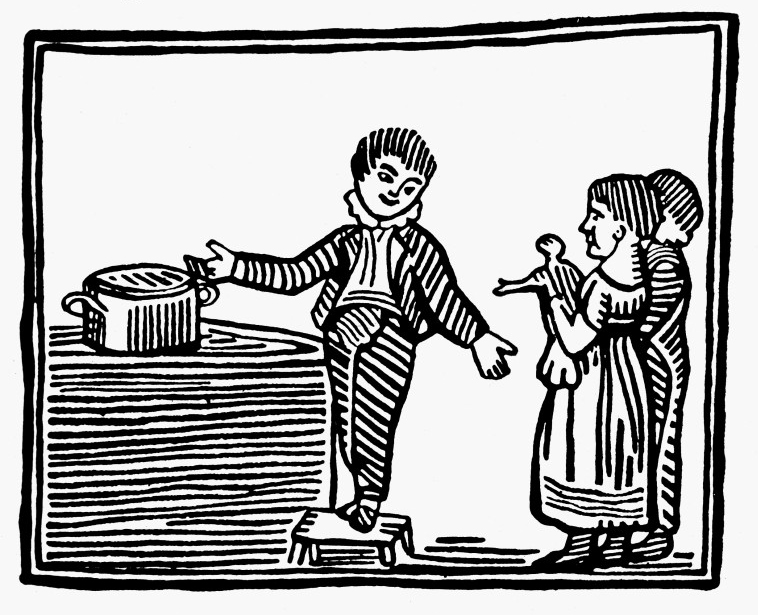
Who among us as children didn’t try to repeat “Betty Botter Bought some Butter” or “Peter Piper Picked a Peck of Pickled Peppers”? These tongue twisters, classics that have been with us for centuries, offer an engaging challenge to kids when reading them aloud or memorizing them. Today there are even whole books written with that style, for example, Margaret Mahy’s Bubble Trouble.
Tweaking words in humorous ways for the sake of rhyming is another time-honored technique. Chris Harris, in his poem “The Modern Dinosaur,” cleverly messes with our language by using “thinked” as a punch line set-up for “extinct.” And in “The Hungry Giraffe,” he pairs “swallow” with an unexpected “tomallow.”
Inventing words
Often poets go beyond tweaking to make up their own words. Have you ever counted how many there are in Lewis Carroll’s “The Jabberwocky”? Twenty-eight, if you are wondering—some of which are now a part of our standard dictionaries. Carroll often used the technique of portmanteau, fusing parts of standard words into one, such as “chortle”—chuckle + snort. Dr. Seuss gives us many words including nerd, grinch, and wubbulous, and Silverstein introduces snickerfritz, gumbly, and willy-waw, to name a few. Word inventions can come in handy, too, when a poet needs to match hard-to-rhyme words.
Harris has fun with his readers in taking some of his to new levels in this hypothetical title:
JADA JAMILA JEMOTE-UNTROLD-PARR WHO REALLY LOVED HER REMOTE-CONTROLLED CAR
Playing with Logic
“Hey Diddle Diddle” is surely one of the most oft-recited Mother Goose rhymes. We know that cats can’t play fiddles, nor can cows jump over the moon, dogs laugh, or dishes run away with spoons, but it’s this type of silly, impossible imagery that makes it so much fun.
“Hey diddle-diddle,
The cat and the fiddle,
The cow jumped over the moon…”
Illogical premises and action are at the basis of the humor in many of Dr. Seuss’s rhyming stories, too. (We can all think of examples, like an elephant hatching an egg, or a funny-looking cat in a tall hat convincing kids to get into trouble.)
Many of Silverstein’s poems are pure nonsense also—they’re based on preposterous improbabilities, and his raw artwork heightens the humor. You likely have your favorites; two of mine are “Don the Dragon’s Birthday” and “The Stupid Pencil Maker” from Falling Up. It could be added that sometimes his poems contain important morals or messages, and the fact that they’re dressed in nonsense keeps them from seeming preachy.
Limericks
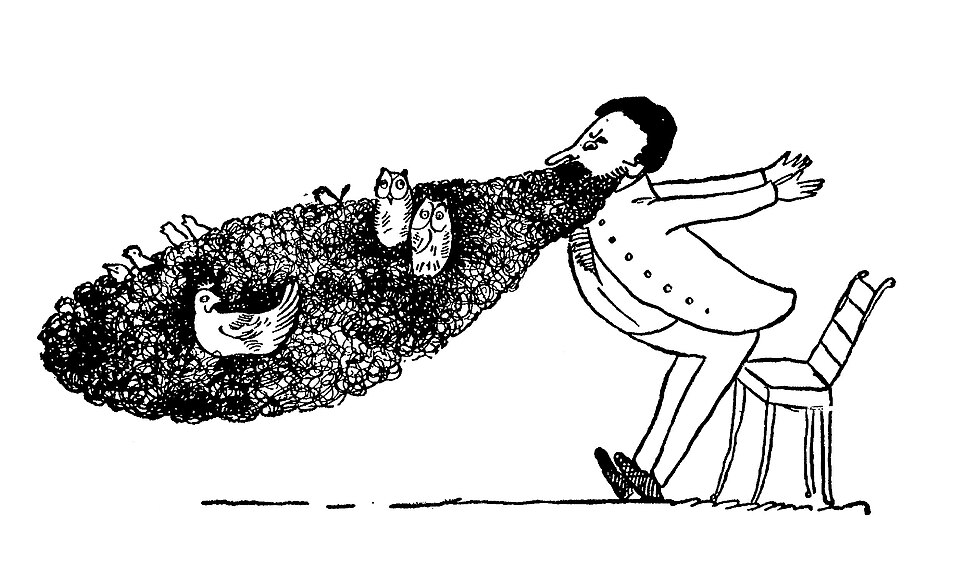
Limericks definitely belong in discussions of nonsense poetry. Made famous by the prolific Edward Lear, kids enjoy reading and writing them. One of Lear’s that children love is this classic:
“There was an Old Man with a beard,
Who said, 'It is just as I feared!
Two Owls and a Hen,
Four Larks and a Wren,
Have all built their nests in my beard!'”
So, if you’re thinking about writing nonsense poetry, why not give it a try? It’s a genre that deserves a great deal of merit. It stimulates the creativity and imagination in children, and per the website Poems World, can be “thought-provoking, challenging readers to explore the boundaries of language and meaning.” Not to mention, we can all use the laughs.
So, take the advice of Silverstein in his poem “Put Something In”:
“Put something silly in the world
That ain’t been there before.”
For more fantastic content, community, events, and other professional development opportunities, become a member today! Not sure if there is a chapter in your area? Check here.

Paige Vinten Taylor is a longtime member of SCBWI. She has poems and short stories published in a variety of magazines and journals, including Highlights for Children, Turtle, The Saturday Evening Post, and Light: A Journal of Light Verse.
Illustrations in the public domain
 Kite Tales