
Tags
California Poets in the Schools, education, interview, K-12, Meg Hamill, poem, poems, poet, poetry, poets, schools, students, teaching, writing
by Paige Vinten Taylor

California Poets in Schools (CalPoets) is a thriving program that encourages students to write. Established in 1964, the nonprofit has been successful not only in improving its students’ writing skills, but also in enhancing their personal development. Part of what makes it so special is that the medium used is poetry. I was fortunate to interview Executive Director Meg Hamill for Kite Tales.
Paige Vinten Taylor: Hi, Meg. Congratulations on celebrating CalPoets’ 60th anniversary this year. Tell us, why writing skills and why poetry?
Meg Hamill: Thank you, Paige. It’s wonderful to be continuing this legacy of poetry in the classroom. Writing is often the last of a student’s academic skills to be developed because it can be complicated and intimidating. With all the rules for spelling and grammar, many students shy away from it. But poetry is flexible; it doesn’t have just one “look.” Formal rules can be put aside, encouraging students to “just write,” and taking the “scary” out of the process.
PVT: Do you see other benefits?
MH: Yes, though academic progress is very important to the program, there’s a lot of change that comes in the way of personal development. In our workshops, usually students write poetry that “meets the moment”—it’s about the challenges in their lives, often pressures that impact mental health. Being able to process these issues through poetry in a safe environment is very therapeutic for them and a chief benefit of the program.
“Poetry became ’the light that saved me.’ Words suddenly took on individual forms and shapes to create visual spectacles beyond what I would see every day … All the experiences that seemed to stay shut in my mouth now had a way to escape.“
– Carmen Jimenez, past CalPoets student
PVT: How is the program structured?
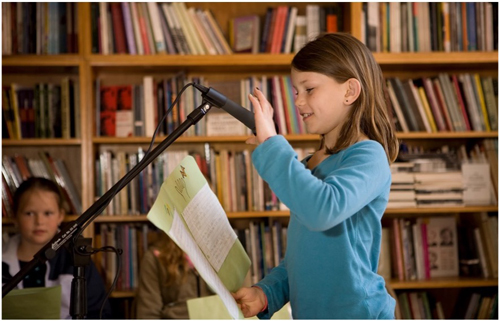
MH: We currently have 70 certified Poet-Teachers who provide workshops to K–12 students throughout the state. With the pandemic not an issue at this point, almost all of our workshops are on-site.
PVT: Are all the workshops the same from one Poet-Teacher to another?
MH: No, there are guidelines, but Poet-Teachers are independent contractors with their own special skills and backgrounds. Also, the needs of the schools may vary, so the Poet-Teachers meet with the schools and set up contracted programs that target those needs. Usually, workshops are held over a period of five to ten weeks, but there is flexibility on how they’re structured.
PVT: Is there a specified lesson format?
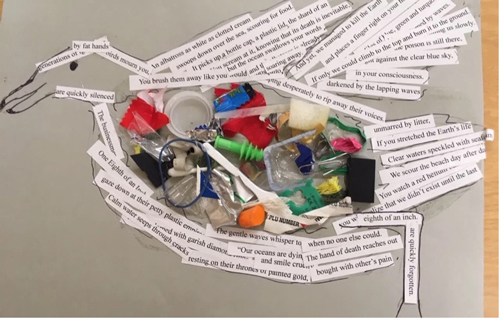
MH: Often, Poet-Teachers begin a workshop by introducing poetry from well-known, contemporary or historical poets representing diverse backgrounds and styles. They follow with a class discussion about the meaning of the poems and any special elements, such as voice, rhythm, meter, and style. Then they give the students a prompt and ask them to write their own poems using one or more of those same elements. For students who have a hard time getting started, a “map” may be provided as a guideline.
PVT: Do the students share their poems?
MH: Students are encouraged to present their poems to their class, and most often they do. The poems may then be printed as part of classroom (or other) anthologies so that the students have something tangible to keep and take home to their families.
PVT: What types of poetry do the students enjoy reading and writing the most, and do they have favorite poets?
MH: We serve students of all levels K–12. So, of course, that answer depends on their ages as well as other factors. Poet-Teachers expose them to a variety of poets and types of poetry. However, ever since Amanda Gorman’s reading of her poetry at President Biden’s inauguration, spoken word has become a very popular genre with many students. Two other favorite poets who come quickly to mind are Joy Harjo and Juan Felipe Herrera.
PVT: What qualifications do you look for in your potential Poet-Teachers?
MH: We’re looking for artists with diverse backgrounds. Having an MFA and being published are assets, but neither is required. What’s more important is that they participate at poetry gatherings like open mic events and are involved in their communities. Also, we look for poets who are enthusiastic and who have pull with students.

PVT: How can a poet apply for a position?
MH: Interested poets may apply at any time. The first step is to read more about that aspect of the program and complete an online application. If the poet seems a good fit for CalPoets, we’ll set up an interview, and if accepted, we’ll provide training for certification. Poet-Teachers receive mentoring as part of their training and then continue to be part of a statewide network of support.
PVT: Many thanks for sharing information about CalPoets, Meg. It’s heartening to hear how poetry is helping students in such important ways.
If you are a teacher, parent, or school administrator interested in bringing the CalPoets program to your or your child’s school, a community poet who would like to become a Poet-Teacher, or just curious about the power of poetry, visit California Poets in the Schools. Next in this two-part anniversary celebration, Kite Tales interviews Jessica Wilson, a Poet-Teacher and the area program coordinator for CalPoets in Los Angeles County, who will discuss her role and experience in the classroom.
This interview has been edited and condensed for brevity and clarity.
For more fantastic content, community, events, and other professional development opportunities, become a member today! Not sure if there is a chapter in your area? Check here.

Paige Vinten Taylor is a longtime member of SCBWI. She has poems and short stories published in a variety of magazine and journals, including Highlights for Children, Turtle, The Saturday Evening Post, and Light: A Journal of Light Verse.
All photos, student quote, and 60th Anniversary logo courtesy of California Poets in the Schools
 Kite Tales
Pingback: Interview with Jessica Wilson: Celebrating 60 Years of California Poets in the Schools, Part Two | Kite Tales