
Tags
ADHD, authors, Blackstone Publishing, CamCat Books, Christine Van Zandt, editing tips, editors, publishing, publishing tips, Sara Hosey, Summer People, writing, YA

The editorial process is a give-and-take experience between two equal, essential partners. Kite Tales listens in as YA author Sara Hosey and freelance editor Christine Van Zandt discuss working together to bring a book they felt was both crowd-pleasing and socially significant to market. Summer People, published by CamCat Books and released August 8, 2023, tells the story of seventeen year-old Christmas Miller. Over the course of a summer, as Christmas tries to navigate sudden friction in her closest friendship and fathom a violent attack on another of her friends, she learns that the ADHD she’d thought was a liability is actually a superpower. Here are Sara’s and Christine’s reflections on the path to publication. – KT

CHRISTINE VAN ZANDT: Welcome to Kite Tales! Summer People is your third traditionally published YA book. Are you agented? If not, how have you sold your manuscripts?
SARA HOSEY: Thank you, Christine, and a pleasure to be here. I’ve published all three books (and an upcoming fourth book) without an agent. My path to publication was sort of idiosyncratic, but research, selective querying, unexpected connections, small presses—and the relationships developed while working with them—have all played a part. I discovered CamCat Books after reading a positive review of their book The Taxidermist’s Lover in the New York Times. I googled them and was really excited not only by their list, but to find that they were actively seeking genre fiction and that—like many small and mid-sized presses—they were happy to accept work from unagented authors. They’ve now published two of my books, and I’ve loved working with them. And, for Summer People, with you.
CVZ: When CamCat editorial director Helga Schier queried me about the job, I immediately knew I was in because of the strong voices of your characters. Beyond that, the story was cleverly layered and included thoughtfully considered issues relevant today.
SH: We did three full-book developmental editing passes. After developmental editing, the book went to a copy editor (though you still participated in our conversations), and then it was almost done. I received ARCs (advanced reader copies) and, in addition to the proofreader that CamCat hired, I was encouraged to read for typos or consistency problems before there was no more possibility of changes: an experience that brings both terror and relief.
CVZ: I like how CamCat also kept you in the loop throughout the process. You don’t always see that, but it is more typical with smaller houses. How long did it take from when you first got the book deal with CamCat to the book’s August 2023 publication date?
SH: It was quick—a little more than a year.
CVZ: During that year, you and I talked quite a bit about getting the depiction of ADHD right in Summer People. Was there anything you changed in your depiction of it or that you learned yourself along the way?
SH: I was pretty confident that I knew a lot about it when I started the novel. To my surprise, I did wind up learning quite a bit, both in terms of how ADHD might manifest differently for different folks, as well as how my own life has been impacted by it. Perhaps most crucially, writing about how my protagonist, Christmas’s, symptoms manifested had me rethinking some of my own behaviors and idiosyncrasies and increasingly placing them in the “ADHD-stuff” column. For example, like Christmas, I am chronically early and while this sounds like the opposite of ADHD, it’s actually a workaround: I am not great at keeping track of time and would probably often be late, if I didn’t live in fear of disappointing and angering people—which itself is perhaps related to rejection sensitivity, another ADHD-related thing. And so I err on the side of earliness, sometimes compulsively.
I didn’t understand myself as having ADHD until I was an adult, but in the novel, Christmas gets diagnosed in elementary school. This, too, taught me about how far we’ve come in recognizing and sometimes even appreciating neurodiversity, especially in girls and women. One thing I love about the novel is that Christmas’s ADHD isn’t this huge problem. It has certainly impacted her life, but it’s not always a bad thing—sometimes it’s a good thing—and it’s always simply a part of who she is and how she experiences the world.
CVZ: In closing, can you share some of your writing hacks with our readers?
SH: I have a couple of practices that work for me. The first is to keep a list of your ideas—I like to keep a notebook, although the Notes app works great, too—and I try to make sure that I am recording two ideas a day. I am very flexible in terms of what counts as an idea: it can be a character name or a description of something I’m experiencing, a joke, or, an idea for a plot. But again, the idea itself might be slight or profound. What’s important is the practice of recording it, as, too often, we have ideas and we are so confident we’ll remember them later and then they’re gone forever.
My other practice—and this builds on what I was talking about above, is very important to me as someone who has ADHD and struggles with time management but is also gifted with hyperfocus—is setting a timer when I write. I usually do half-hour segments. During that half hour, I don’t research or check email or social media. I am only writing. Once I get started, I don’t struggle with distraction because I know what the rules are and because of my aforementioned hyperfocus. However, it is easy for me to lose track of time completely, and so the alarm is a helpful reminder that there is a real world beyond my screen, and that there might be other obligations demanding my attention.
To everyone who has read this far in our conversation, I want to add an extra note of encouragement. I sincerely believe there is a reader out there, looking for precisely what you have to offer. And when you find your reader, it is one of the most wonderful feelings in the world. So keep writing and keep polishing and do the less-fun groundwork of researching agents and publishers and markets, so that you can get that book into that reader’s hands! You’ll get there! Just find your path and follow it.
CVZ: Thank you for sharing your insights with our audience. I look forward to reading your next book, Dirty Suburbia, a collection of short stories (adult literary fiction, Vine Leaves Press, 2024).
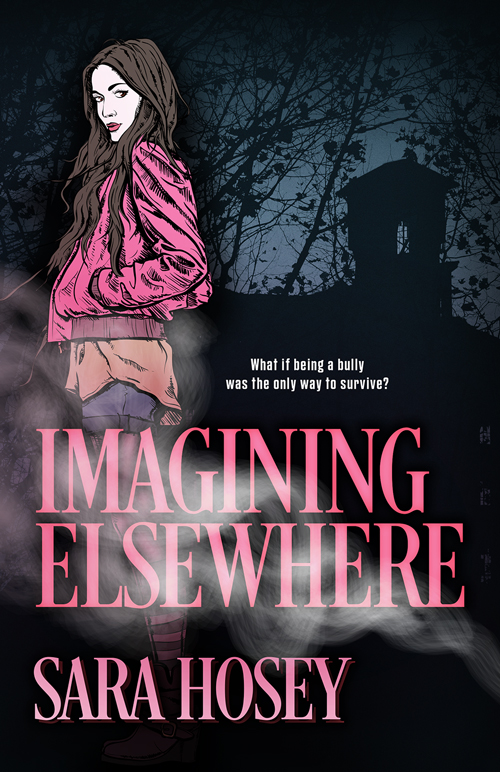
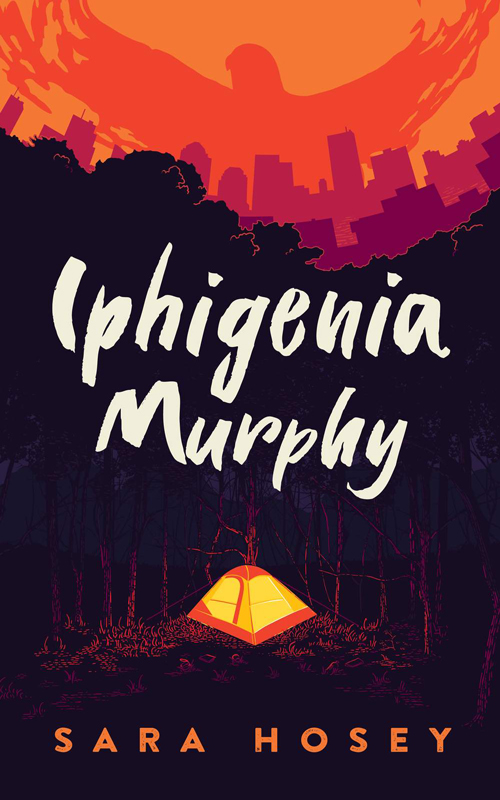
Sara Hosey is the author of three young adult novels: Iphigenia Murphy, Imagining Elsewhere, and Summer People. You can find her at sarahosey.com.

Christine Van Zandt is a literary editor and writer, and owner of Write for Success Editing Services. She writes the quarterly “Ask an Editor” column for Kite Tales.
This interview has been edited and condensed.
For more fantastic content, community, events, and other professional development opportunities, become a member today! Not sure if there is a chapter in your area? Check here.
Photo of Sara Hosey by Mike Vorrasi
Book covers:
Iphigenia Murphy, courtesy of Blackstone Publishing
Imagining Elsewhere, courtesy of CamCat Books
Summer People, courtesy of CamCat Books
 Kite Tales
Thank you. That was an illuminating interview and I was interested to know that you suffered from ADHD. I have two sons who suffer from it and I have a granddaughter on the spectrum. I wish you every success and I’d love to read this book. Blessings.
LikeLike