
Tags
California Poets in the Schools, education, interview, Jessica Wilson, K-12, poetry, poets, schools, students, teaching
by Paige Vinten Taylor
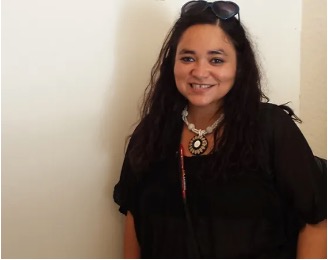
California Poets in the Schools Poet-Teacher Jessica Wilson brings poetry to students at elementary, middle, and high school levels. As CalPoet’s area coordinator for Los Angeles County, she onboards new Poet-Teachers and manages new opportunities for the program. Jessica is also active in the broader Los Angeles poetry community, including as founder and director of the Los Angeles Poet Society, whose offerings include year-round open mic events, a Creative Aging Senior Advocacy program, and Bilingual Poetry Workshops for all ages.
Paige Vinten Taylor: Hi Jessica. Welcome to Kite Tales. I’m curious to hear how you first got interested in poetry. Was there a school connection for you?
Jessica Wilson: Thanks for inviting me, Paige. And yes, there was that connection! When I was in middle school, we had a visiting group of poets teach us about stream-of-consciousness writing and the Beat Generation of poets. After I learned about Lawrence Ferlinghetti, I was hooked for good! The fact that I could just write whatever was on my mind, and share my thoughts and ideas, was liberating and exciting. I was floored by what I wrote, and how I was able to write it . . . just flowing, just laying down my thoughts on the paper. That was power. That was creative. That was fun! After that point, I became serious about poetry and was on my way to becoming a lifelong writer and a published poet!
PVT: When did you get involved with CalPoets?
JW: I started with CalPoets as a Poet-Teacher in 2012, with instruction and mentorship from the CalPoets team, an amazing network of poets and teachers across California. I learned so much from them about all aspects of the job. In 2013, I took over as the LA County area coordinator for the organization.
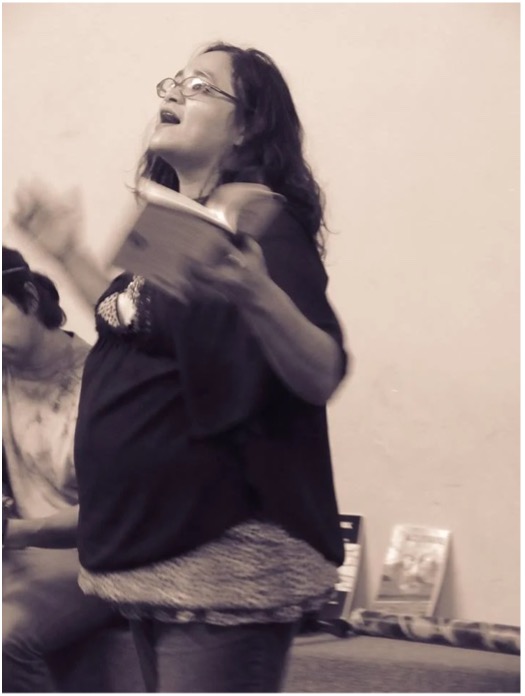
PVT: In the classroom, how do you break the ice and get your lessons started?
JW: When I work with young children, I usually begin with a fun or silly poem, often something from Dr. Seuss, with rhyme, repetition, alliteration, and other poetic devices elementary school students enjoy. Then we often play a game called “poet’s eye”—in which we look at ordinary items in the classroom and imagine what else those objects could be. For example, if I pick up a dry board eraser, one child might say that it’s a ship gliding down a sky river, and another might say a satellite from outer space. That kind of thinking leads to some very inventive poems.
Children roughly 13 and older are usually interested in slam or spoken word poetry, about topics that can relate to their lives. I usually start off reading one of my own poems, and then ask them to try writing something personally important to them—not to plan it too much or worry about how it sounds, just to write down words and phrases in a stream-of-consciousness style. I tell them to “think like water.”
PVT: Who are some of the favorite poets of the older students?
JW: One whose work we often read from is Frank Escamilla, the Bus Stop Prophet. The students especially like his motivational poem “Still I Stand.” Another is Ethiopian poet Hiwot Adilow, who wrote “Say it Right” about honoring a person’s identity and what’s important to them. And then there’s National Youth Poet Laureate Amanda Gorman, who read her poem “The Hill We Climb” at the inauguration of President Joe Biden and Vice President Kamala Harris. Amanda was a student in our program, and her spoken word style has really heightened interest in that genre. I had the joy of teaching Amanda when she was part of our Beyond the Bell Poetry residency at Beyond Baroque in Venice, CA. It was so exciting to nurture her voice as an activist, artist, and creative!
PVT: What a great experience for her and for you! Can you talk a little now about the benefits you have seen to students over the years?
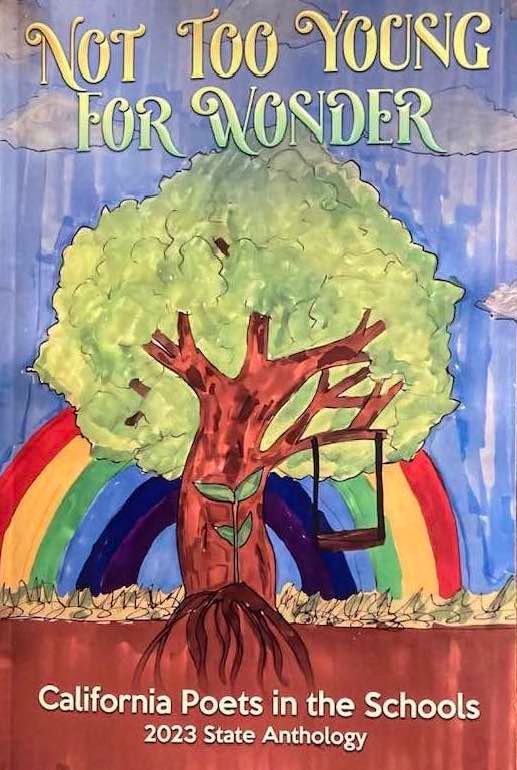
JW: Younger students learn to love reading and writing poetry, to think about word choices, and to stretch their imaginations. The older ones learn to give voice to their feelings through their poetry—empowering them throughout life—and in sharing their personal “truths” through their poems, and they build very special connections with their classmates. Also, five of our students had their poems published in the CalPoets statewide anthology last year, a notable accomplishment and a real confidence-builder.
PVT: What do you like best about your job?
JW: That would definitely be hearing the students’ poems as they journey through the program, and witnessing their progress and transformations.
PVT: It sounds like a greatly rewarding job for someone like yourself who has such a passion for poetry. Jessica, thank you so much for sharing information and insights about the work you do with Cal Poets and other resources available for our poetry-inclined readers in L.A. and the Tri-Regions.
JW: It was my pleasure. Thank you for the opportunity!
To learn more about Jessica, visit her website. For further information about CalPoets programs, including statewide opportunities to become a Poet-Teacher, read Part One of this interview series, Interview with Meg Hamill: Celebrating 60 Years of California Poets in the Schools, and visit California Poets in the Schools.
This interview has been edited and condensed for brevity and clarity.
For more fantastic content, community, events, and other professional development opportunities, become a member today! Not sure if there is a chapter in your area? Check here.

Paige Vinten Taylor is a longtime member of SCBWI. She has poems and short stories published in a variety of magazine and journals, including Highlights for Children, Turtle, The Saturday Evening Post, and Light: A Journal of Light Verse.
Images provided by Jessica Wilson and California Poets in the Schools
 Kite Tales