
Tags
Carter Jones, Gary Schmidt, historical fiction, Okay for Now, Orbiting Jupiter, Pay Attention, So Tall Within, time management, What Came from the Stars, writing, writing tips
 Gary Schmidt is a two-time Newbery award-winning author and professor of English at Calvin College in Grand Rapids, Michigan. He received both a Newbery Honor and a Printz Honor for Lizzie Bright and the Buckminster Boy and a Newbery Honor for The Wednesday Wars. He lives with his family on a 150-year-old farm in Alto, Michigan, where he splits wood, plants gardens, writes, and feeds the wild cats that drop by. He’s trading the Michigan cold for warm L.A. as faculty for this year’s SCBWI-L.A. Writers Day. Today, he’s sharing his experience and advice on writing emotionally heavy subject matter for kids, balancing multiple projects, and the historical fiction we all should be reading.
SARAH PARKER-LEE: You’ve shared that you weren’t a big reader as a kid until one particular teacher not only taught you to read, but taught you that you were capable of reading and understanding, that you weren’t “stupid.” How do you try to impart this same encouragement to your young readers?
 GARY SCHMIDT: A good question. I think I come to the writing with the assumption that I’m going to ask the reader to do some work — and trust that they will be willing to do that. In Okay for Now, I have a character so emotionally hurt that he won’t articulate what he would like to say — and so many of his sentences end before he gets to the point — and often, he tells the reader that his story is none of their business. Or in What Came from the Stars, the reader is confronted with an alien language and has to figure out meanings — just like the characters. In Orbiting Jupiter the narrator is a naïve twelve-year-old kiddo, but the story he wants to tell is that of a very much older fourteen-year-old kiddo. In all those cases, the reader has a lot of work to do to figure out what is going on, and so has to become invested in doing part of the work of the novel. Succeeding at that involves a kind of competence that is, it seems to me, an article of trust between the reader and the writer that involves encouragement.
SPL: Many of your books aren’t as lighthearted or full of the typical middle-grade humor we often come to expect for that age group. Any tips on writing about heavier subjects for a middle-grade audience? Continue reading
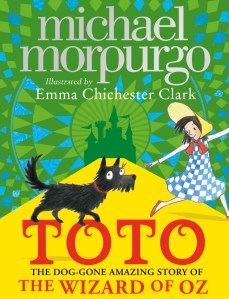
 Sometimes the person who’s about to change your life has been there all along!
 I met Stan Yan, a Denver-based writer/illustrator, caricature artist, and instructor, at his booth at San Diego Comic this year. I’m a bit of a zombie-aficionado and could not resist checking out his kids’ picture book –
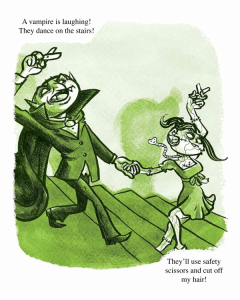 Sarah Parker-Lee: You’ve written and illustrated comics and books with horror themes for adults and older readers, but There’s a Zombie in the Basement is a picture book for kids. How did that come about? Were you worried it might be too scary?
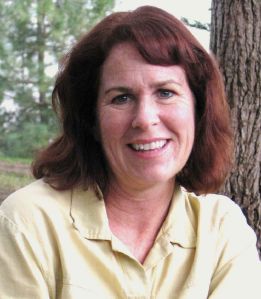 Mary Ann Fraser is the author/illustrator of 60 fiction and non-fiction books for children. Her latest picture book,
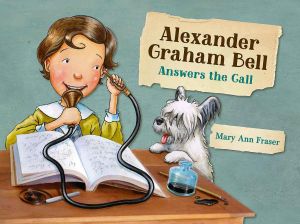

 Once a month, I lead a group called
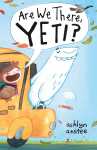

 Ashlyn Anstee: It helps that all of them are a little different, so it’s actually been fun to jump between them, thank goodness. I started out first as a reader–I was a voracious reader as a kid (and my mom’s a teacher-librarian). I didn’t really start to draw until my teens. I fell in love with animation, and it wasn’t until I graduated from college that I started to rediscover illustration and kids’ books. I find writing the hardest, so I’ve been focusing on that, lately!

